Po' boy
A New Orleans sandwich on crackly-crusted French bread, filled with fried shrimp, oysters or roast beef with gravy.
By Tamsin Arroyo · November 26, 2026 · Cajun and Creole · New Orleans
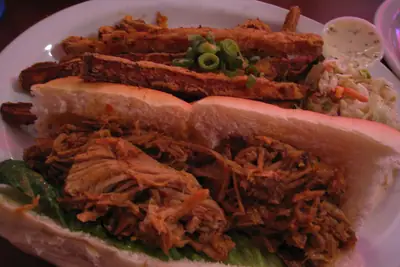
Photo: Mack Male from Edmonton, AB, Canada, source via Wikimedia Commons, CC BY-SA 2.0, cropped. Dish identified by our editor.

Where it comes from
The most-cited origin story dates to 1929, when Bennie and Clovis Martin, former streetcar conductors who ran a sandwich shop, promised free sandwiches to striking streetcar workers. Workers coming in were greeted as "another poor boy", and the name stuck to the sandwich.
The bread matters as much as the filling: New Orleans French bread has a thin, shattering crust and a very light interior, and local bakeries such as Leidenheimer, founded in 1896, supply many shops. "Dressed" means lettuce, tomato, pickles and mayonnaise.
Styles and variations
- Fried shrimp: The most common order, often dressed.
- Fried oyster: Seasonal and prized.
- Roast beef "debris": Slow-cooked beef in its gravy, messy by design.
What to look for
- Bread that flakes all over the table when you bite it.
- Seafood fried in a light cornmeal coating, hot from the fryer.
- The question "dressed?" at the counter.
Where it's iconic
Po' boy is most associated with New Orleans. Our city guides where it's a signature: New Orleans. Find cajun and creole places in each city's directory, for example cajun and creole in New Orleans.
Make it at home
- A light, airy baguette with a thin crust is the nearest substitute for New Orleans French bread.
- Season cornmeal with salt, pepper and a Creole spice blend.
- Fry in small batches at 350°F so the oil temperature doesn't drop.
Dietary notes
Rarely vegetarian. Usually contains wheat. Recipes and kitchens vary, so ask the restaurant about allergens. See our dietary glossary.
Sources
Where an origin story is disputed we say so. Spotted an error? Tell us.