Jambalaya
Louisiana rice cooked with meat or seafood, the trinity of vegetables and spice, in one pot.
By Tamsin Arroyo · November 26, 2026 · Cajun and Creole · Louisiana
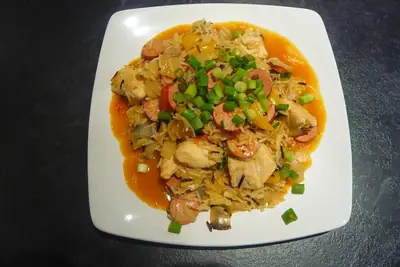
Photo: Craig Murphy, source via Wikimedia Commons, CC BY 2.0, cropped. Dish identified by our editor.

Where it comes from
Jambalaya is a Louisiana rice dish with roots in Spanish and French cooking, often compared to paella, and adapted with local ingredients in the 18th and 19th centuries. The town of Gonzales, Louisiana, calls itself the Jambalaya Capital of the World and has held a jambalaya festival since the late 1960s.
Two main styles exist. Creole or "red" jambalaya from New Orleans includes tomatoes. Cajun or "brown" jambalaya from the rural parishes leaves them out and gets its color from browning the meat in the pot.
Styles and variations
- Creole (red): Tomato-based, often with shrimp and sausage.
- Cajun (brown): No tomato; browned chicken and smoked sausage.
- Pastalaya: The same idea with pasta instead of rice.
What to look for
- Rice cooked in the stock so every grain is seasoned, not sauced afterward.
- Separate grains, not mush.
- Smoked sausage with real smoke flavor.
Where it's iconic
Jambalaya is most associated with Louisiana. Our city guides where it's a signature: New Orleans. Find cajun and creole places in each city's directory, for example cajun and creole in New Orleans.
Make it at home
- Brown the meat hard in a heavy pot; the browned bits are the flavor of a brown jambalaya.
- Use long-grain rice and don't stir once it's covered.
- About 2 cups liquid per cup of rice, adjusted for the moisture of tomatoes if you use them.
Dietary notes
Rarely vegetarian. Often gluten-free, but ask about sauces and shared fryers. Recipes and kitchens vary, so ask the restaurant about allergens. See our dietary glossary.
Sources
Where an origin story is disputed we say so. Spotted an error? Tell us.