Cajun and Creole
Louisiana cooking builds on French techniques and Spanish, West African, Caribbean, Indigenous, German and Italian influences. Two traditions are usually distinguished: Creole, the cooking of New Orleans, with butter, cream and tomatoes; and Cajun, from the descendants of French-speaking Acadians exiled from Canada in the 18th century who settled the prairies and bayous west of the city. They overlap a lot.
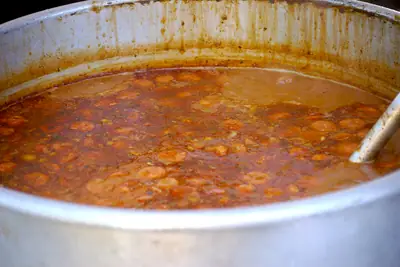
Photo: jc.winkler, source via Wikimedia Commons, CC BY 2.0, cropped. Dish identified by our editor.

A short history
Both cuisines start many dishes with a roux and the "holy trinity" of onion, celery and bell pepper. New Orleans restaurants such as Antoine's (1840) shaped Creole fine dining, while Cajun cooking became nationally famous in the 1980s through chef Paul Prudhomme.
Styles to know
Creole
Gumbo with tomatoes, shrimp Creole, red jambalaya, po' boys, beignets.
Cajun
Dark-roux gumbo, brown jambalaya, boudin, crawfish boils, étouffée.
How to order
- Red beans and rice is the traditional Monday lunch in New Orleans.
- Crawfish season usually runs from about January to June.
- For po' boys, say "dressed" if you want lettuce, tomato, pickles and mayo.
Dietary notes
Rouxs use wheat flour, so gumbo and étouffée are usually not gluten-free. Many dishes include sausage or seafood stock; vegetarian versions exist but ask. Halal and kosher status depends on certification and sourcing: ask the restaurant. Dietary glossary
Where to find cajun and creole food
Cities we cover with strong cajun and creole traditions: New Orleans, Houston. Across our map areas, OpenStreetMap lists 46 places tagged with a matching cuisine:
| City | Listings |
|---|---|
| New Orleans | 15 |
| Houston | 7 |
| Portland | 7 |
| New York City | 4 |
| Los Angeles | 3 |
| Austin | 3 |
| Chicago | 2 |
| San Francisco | 2 |
| Philadelphia | 1 |
| Nashville | 1 |
| Kansas City | 1 |
Counts reflect how contributors tagged places in OpenStreetMap (data © OpenStreetMap contributors, ODbL), not how many restaurants exist.