Gumbo
A dark, roux-thickened Louisiana stew of seafood or chicken and andouille, served over rice.
By Tamsin Arroyo · November 26, 2026 · Cajun and Creole · Louisiana
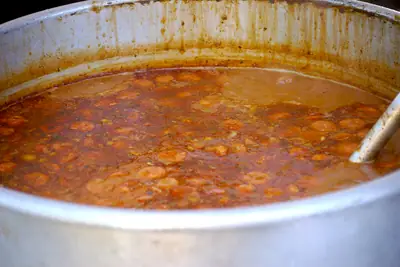
Photo: jc.winkler, source via Wikimedia Commons, CC BY 2.0, cropped. Dish identified by our editor.

Where it comes from
Gumbo draws on several food traditions of colonial Louisiana: a French-style roux, okra brought through the West African slave trade (the word "gumbo" is generally traced to a Bantu word for okra), and filé, ground sassafras leaves used by the Choctaw. Written references to the dish go back to the early 1800s.
There is no single recipe. Creole gumbo in New Orleans often includes tomato and shellfish; Cajun gumbo from the prairies west of the city tends to use a darker roux, chicken and smoked sausage, and no tomato. Gumbo z'herbes, made with many greens, is traditional on Holy Thursday.
Styles and variations
- Seafood gumbo: Shrimp, crab and often oysters, typically thickened with okra.
- Chicken and andouille: A dark-roux Cajun classic.
- Gumbo z'herbes: A green gumbo of many greens, associated with Lent.
What to look for
- A roux cooked to the color of milk chocolate or darker, with a toasty smell.
- Rice served in the bowl, not mixed through.
- The "holy trinity": onion, celery and bell pepper.
Where it's iconic
Gumbo is most associated with Louisiana. Our city guides where it's a signature: New Orleans, Houston. Find cajun and creole places in each city's directory, for example cajun and creole in New Orleans.
Make it at home
- Make the roux with equal parts oil and flour and stir constantly over medium heat; it takes 30 to 45 minutes.
- A heavy Dutch oven helps the roux cook evenly.
- Add filé off the heat at the end, or it turns stringy.
Dietary notes
Rarely vegetarian. Usually contains wheat. Recipes and kitchens vary, so ask the restaurant about allergens. See our dietary glossary.
Sources
Where an origin story is disputed we say so. Spotted an error? Tell us.