Beignets
Square, pillowy fried dough buried in powdered sugar, the New Orleans morning pastry.
By Tamsin Arroyo · November 26, 2026 · Cajun and Creole · New Orleans
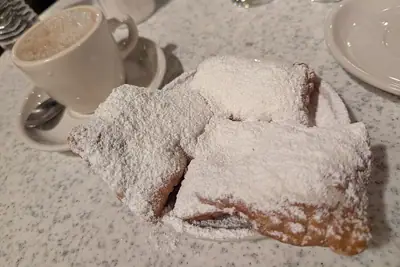
Photo: Jeremy Thompson, source via Wikimedia Commons, CC BY 4.0, cropped. Dish identified by our editor.

Where it comes from
Beignets came to Louisiana with French colonists and the Acadians who settled there in the 18th century. In New Orleans the beignet became the square, yeast-raised version eaten with café au lait, a pairing tied to the coffee stands of the French Market.
Louisiana named the beignet its official state doughnut in 1986. Café du Monde, which dates its French Market stand to 1862, is the best-known place to eat them, open long hours with chicory coffee.
Styles and variations
- Classic: Three to an order, heavy on the powdered sugar.
- Savory: Some restaurants serve crab or crawfish beignets as a starter.
- Filled: Newer shops fill them with praline or chocolate.
What to look for
- Hollow, puffed squares that are crisp outside and soft inside.
- Served hot, straight from the fryer.
- Café au lait with chicory alongside.
Where it's iconic
Beignets is most associated with New Orleans. Our city guides where it's a signature: New Orleans. Find cajun and creole places in each city's directory, for example cajun and creole in New Orleans.
Make it at home
- A yeasted dough rested overnight in the fridge is easier to roll.
- Fry at 350 to 360°F, flipping once when they puff.
- Dust with powdered sugar while they are hot.
Dietary notes
Usually vegetarian as served. Usually contains wheat. Recipes and kitchens vary, so ask the restaurant about allergens. See our dietary glossary.
Sources
Where an origin story is disputed we say so. Spotted an error? Tell us.