Sushi
Vinegared rice with raw or cooked fish and other toppings, as nigiri, rolls or hand rolls.
By Tamsin Arroyo · November 26, 2026 · Japanese · Japan; LA is a US sushi capital
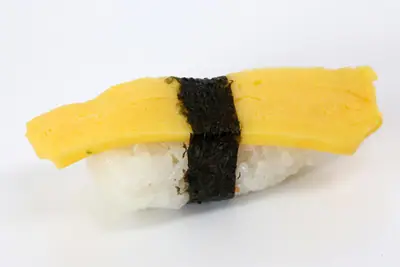
Photo: Tim Reckmann from Hamm, Deutschland, source via Wikimedia Commons, CC BY 2.0, cropped. Dish identified by our editor.

Where it comes from
Sushi began in Southeast Asia and China as fish fermented with rice, a preserving method called narezushi in Japan. In Edo (now Tokyo) in the early 1800s, street vendors began selling nigiri, fresh fish on hand-pressed vinegared rice; Hanaya Yohei is often credited with popularizing it.
The first US sushi bars opened in Los Angeles's Little Tokyo in the 1960s. The California roll, with avocado and crab, is usually traced to Los Angeles in the late 1960s or 1970s, and it helped introduce sushi to diners who were wary of raw fish.
Styles and variations
- Nigiri: Fish over pressed rice.
- Maki and uramaki: Rolls with nori outside or rice outside.
- Omakase: A chef-chosen sequence, usually the most expensive way to eat sushi.
What to look for
- Rice that is lightly seasoned, body-temperature and loosely packed.
- Fish cut to order.
- A chef who tells you which pieces are already seasoned and need no soy sauce.
Where it's iconic
Sushi is most associated with Japan; LA is a US sushi capital. Our city guides where it's a signature: Los Angeles, San Francisco, New York City, Seattle, Miami. Find japanese places in each city's directory, for example japanese in Los Angeles.
Make it at home
- Use short-grain Japanese rice and season it with rice vinegar, sugar and salt while warm.
- Buy fish labeled for raw consumption from a trusted fishmonger.
- A long, sharp single-bevel or thin knife makes clean cuts.
Dietary notes
Vegetarian versions exist but you may need to ask. Can be made gluten-free; ask. Recipes and kitchens vary, so ask the restaurant about allergens. See our dietary glossary.
Sources
Where an origin story is disputed we say so. Spotted an error? Tell us.