Bibimbap
Rice topped with seasoned vegetables, meat, a fried egg and gochujang, mixed at the table.
By Tamsin Arroyo · November 26, 2026 · Korean · Korea; Koreatowns nationwide
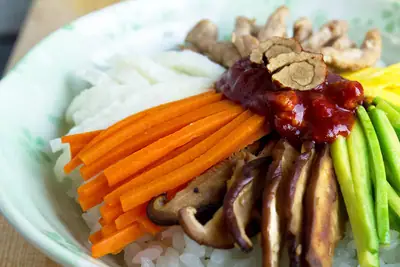
Photo: Chloe Lim, source via Wikimedia Commons, CC BY 2.0, cropped. Dish identified by our editor.

Where it comes from
Bibimbap means "mixed rice". Written references in Korea go back to a cookbook of the late 1800s, and it is associated with the practice of mixing leftover banchan with rice. The city of Jeonju is famous for its version.
Dolsot bibimbap, served in a stone bowl heated until the rice at the bottom turns crisp, became popular in the 20th century and is a Korean restaurant favorite in the US.
Styles and variations
- Dolsot: In a sizzling stone bowl with a crisp rice crust.
- Jeonju: With many toppings and beef tartare (yukhoe).
- Vegetable: Without meat; ask about the egg and sauce.
What to look for
- Toppings seasoned separately, each with its own flavor.
- A hot stone bowl that keeps sizzling.
- Gochujang served on the side so you can adjust heat.
Where it's iconic
Bibimbap is most associated with Korea; Koreatowns nationwide. Our city guides where it's a signature: Los Angeles, New York City, Seattle. Find korean places in each city's directory, for example korean in Los Angeles.
Make it at home
- Season each vegetable separately with sesame oil, garlic and salt.
- A small cast-iron skillet stands in for a stone bowl; oil it and heat before adding rice.
- Let the rice crisp for a few minutes undisturbed.
Dietary notes
Vegetarian versions are common. Can be made gluten-free; ask. Recipes and kitchens vary, so ask the restaurant about allergens. See our dietary glossary.
Sources
Where an origin story is disputed we say so. Spotted an error? Tell us.