Poke
Hawaiian cubed raw fish, usually ahi tuna, dressed with soy sauce, sesame oil, onion and seaweed.
By Tamsin Arroyo · November 26, 2026 · Seafood · Hawaii; bowls everywhere
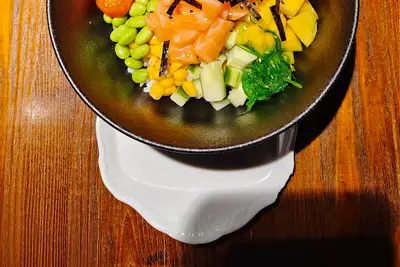
Photo: Mojmir Churavy, source via Wikimedia Commons, CC0 1.0 (Public Domain Dedication). Dish identified by our editor.

Where it comes from
Poke (pronounced poh-KAY) means "to slice" or "cut crosswise" in Hawaiian. Native Hawaiians ate raw reef fish with sea salt, seaweed and roasted kukui nut; Japanese and other immigrants added soy sauce and sesame oil in the 20th century, and the modern ahi poke took shape around the 1970s.
In Hawaii poke is sold by the pound at grocery counters. Poke bowls, with rice and many toppings, spread across the US mainland in the mid-2010s.
Styles and variations
- Shoyu ahi: Soy, sesame oil, sweet onion, green onion.
- Limu: With seaweed and inamona (roasted kukui nut).
- Spicy: With a spicy mayo dressing.
What to look for
- Fish that is bright, firm and cold.
- Simple seasoning that lets the fish show.
- Freshly made, not sitting dressed for hours.
Where it's iconic
Poke is most associated with Hawaii; bowls everywhere. Our city guides where it's a signature: Los Angeles, Seattle, San Francisco. Find seafood places in each city's directory, for example seafood in Los Angeles.
Make it at home
- Buy sushi-grade tuna from a trusted fishmonger and keep it cold.
- Cut into 3/4-inch cubes with a sharp knife.
- Dress just before serving.
Dietary notes
Vegetarian versions exist but you may need to ask. Can be made gluten-free; ask. Recipes and kitchens vary, so ask the restaurant about allergens. See our dietary glossary.
Sources
Where an origin story is disputed we say so. Spotted an error? Tell us.