New York-style pizza
Large, thin, foldable slices with a crisp-chewy rim, a light layer of tomato sauce and low-moisture mozzarella.
By Tamsin Arroyo · November 26, 2026 · Italian-American · New York City
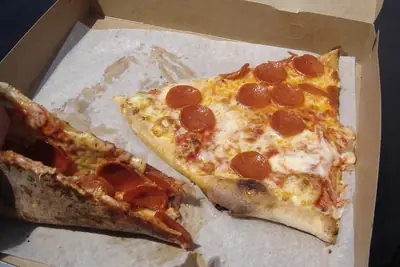
Photo: Wikiuser100, source via Wikimedia Commons, CC BY-SA 4.0, cropped. Dish identified by our editor.

Where it comes from
Pizza arrived with Neapolitan immigrants in the late 1800s. Lombardi's on Spring Street is widely cited as the first business licensed to sell pizza in the United States, in 1905, and early pizzerias baked in coal-fired ovens because that was what bread bakers had.
The slice shop came later. Gas-fired deck ovens after World War II made it practical to bake big pies and sell them by the slice, and the 18-inch pie cut into eight wide slices became the city's standard. The fold-in-half way of eating a slice is a practical answer to a thin, wide wedge.
Styles and variations
- Plain slice: Tomato sauce, low-moisture mozzarella, a dusting of grated hard cheese.
- Grandma slice: A thinner square pie baked in an oiled sheet pan, often with the sauce spooned over the cheese.
- Sicilian slice: Thick, airy, square, baked in a pan.
What to look for
- A rim that crackles when you fold it, with an open, chewy crumb.
- Sauce that tastes of tomato rather than sugar, and cheese that stays put when you lift the slice.
- A spotted, browned underside (look at the bottom of a slice).
Where it's iconic
New York-style pizza is most associated with New York City. Our city guides where it's a signature: New York City. Find italian-american places in each city's directory, for example italian-american in New York City.
Make it at home
- A pizza steel or stone preheated for 45 minutes at the oven's highest setting gets closest to a deck oven.
- Use bread flour and let the dough rest in the fridge for one to three days.
- Stretch by hand; a rolling pin presses out the air that makes the rim chewy.
Dietary notes
Usually vegetarian as served. Usually contains wheat. Recipes and kitchens vary, so ask the restaurant about allergens. See our dietary glossary.
Sources
Where an origin story is disputed we say so. Spotted an error? Tell us.