Lobster roll
Chunks of lobster meat on a buttered, griddled split-top bun, dressed with mayo or warm butter.
By Tamsin Arroyo · November 26, 2026 · Seafood · New England
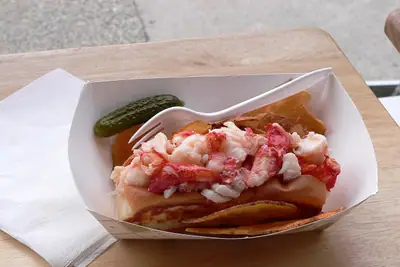
Photo: Lee Coursey, source via Wikimedia Commons, CC BY 2.0, cropped. Dish identified by our editor.

Where it comes from
The earliest commonly cited lobster roll was served at Perry's, a restaurant in Milford, Connecticut, in the late 1920s: warm lobster meat with butter on a toasted bun. The cold, mayonnaise-dressed version became the standard in Maine.
Both styles rely on the New England split-top bun, which is baked side by side so the outside edges can be buttered and griddled. Since the 2000s, lobster shacks and counters have taken the roll far beyond New England.
Styles and variations
- Maine style: Cold, lightly dressed with mayonnaise, sometimes with celery.
- Connecticut style: Warm, tossed in melted butter.
- Lobster salad roll: More mayo and chopped vegetables; a lighter take.
What to look for
- Big pieces of claw and knuckle meat, not shreds.
- A buttery, griddled split-top bun.
- Light dressing; the lobster should be the main flavor.
Where it's iconic
Lobster roll is most associated with New England. Our city guides where it's a signature: New York City. Find seafood places in each city's directory, for example seafood in New York City.
Make it at home
- Steam lobsters about 8 minutes per pound, then chill before picking.
- Butter both outside faces of the bun and griddle until golden.
- Season with a little lemon, salt and pepper; don't drown it.
Dietary notes
Rarely vegetarian. Usually contains wheat. Recipes and kitchens vary, so ask the restaurant about allergens. See our dietary glossary.
Sources
Where an origin story is disputed we say so. Spotted an error? Tell us.