Burnt ends
Cubes cut from the fatty point of a smoked brisket, re-smoked and sauced until they caramelize.
By Tamsin Arroyo · November 26, 2026 · American barbecue · Kansas City
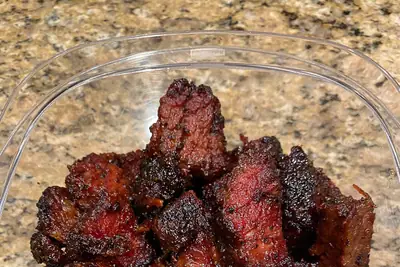
Photo: Gatorfan252525, source via Wikimedia Commons, CC BY-SA 4.0, cropped. Dish identified by our editor.

Where it comes from
Burnt ends began as the crusty, fatty trimmings from the point end of a brisket, which Kansas City barbecue counters, Arthur Bryant's most famously, handed out or sold cheaply. The writer Calvin Trillin, a Kansas City native, praised them in print in the 1970s, and they went from scraps to a menu item.
Today most pitmasters make them on purpose: the point is separated after the first smoke, cubed, tossed in rub and sauce, and returned to the smoker so the sugars caramelize. Kansas City-style barbecue in general is known for a thick, sweet, tomato-and-molasses sauce.
Styles and variations
- Brisket burnt ends: The original, cubed from the point.
- Pork belly burnt ends: A modern version made with cubed pork belly.
- On a sandwich: Piled on white bread or a bun with sauce.
What to look for
- Glossy, sticky edges with soft, rendered fat inside.
- Cubes that are tender, not chewy.
- Sauce that clings rather than pools.
Where it's iconic
Burnt ends is most associated with Kansas City. Our city guides where it's a signature: Kansas City. Find american barbecue places in each city's directory, for example american barbecue in Kansas City.
Make it at home
- Separate the point from the flat after the first long smoke.
- Toss cubes in a little sauce and brown sugar and give them another 1 to 2 hours, covered then uncovered.
- They are rich: serve with pickles and white bread.
Dietary notes
Rarely vegetarian. Often gluten-free, but ask about sauces and shared fryers. Recipes and kitchens vary, so ask the restaurant about allergens. See our dietary glossary.
Sources
Where an origin story is disputed we say so. Spotted an error? Tell us.